International trade has its own language and rules that can intimidate newcomers. But the fundamentals are learnable, and understanding them protects you from costly mistakes. This guide demystifies the essentials every importer needs to know.
Incoterms: who pays for what
Incoterms (International Commercial Terms) define exactly where the seller's responsibility ends and yours begins. The most common:
- EXW (Ex Works) — you collect from the supplier's premises and handle everything: export clearance, freight, insurance, import. Cheapest quote, most work for you.
- FOB (Free On Board) — the supplier delivers the goods, cleared for export, onto the ship. You take over from there. The most common starting point.
- CIF (Cost, Insurance, Freight) — the supplier pays freight and insurance to your destination port; you handle import clearance and onward delivery.
- DDP (Delivered Duty Paid) — the supplier delivers to your door with everything paid. Most convenient, but you lose control over freight and duty costs.
Always confirm the Incoterm when comparing quotes — an "FOB" price and a "DDP" price are not comparable.
Customs, duties and taxes
When goods enter your country, customs assesses import duty and taxes (like VAT or GST) based on the product's classification (HS code), value and country of origin. Research your HS code and duty rate before ordering — it materially affects your landed cost. Some products attract additional charges (anti-dumping duties, excise) or require permits and licences.
Trade agreements can reduce or eliminate duties for goods from certain countries — but only if your supplier provides a valid certificate of origin. Factor this into your sourcing decisions; the duty saving can outweigh a higher unit price elsewhere.
Essential trade documents
International shipments require a standard set of documents. Errors or omissions cause customs delays and storage charges. The core documents are:
- Commercial invoice — details the goods, value and parties.
- Packing list — itemises contents, weights and dimensions.
- Bill of Lading (sea) or Air Waybill (air) — the transport contract and title document.
- Certificate of Origin — states where the goods were made (needed for duty preferences).
- Any required permits, licences or compliance certificates for your product.
Choosing and working with a freight forwarder
A freight forwarder arranges the transport of your goods and handles much of the documentation and customs coordination. For most new importers, a good forwarder is essential — they have the carrier relationships, expertise and systems you lack. Choose one experienced with your trade lane and product type, get clear all-in quotes, and confirm what's included.
A licensed customs broker (sometimes part of the forwarder's service) handles the customs clearance specifically. Get your import processes and any required registrations set up before your first shipment arrives — sorting it out while goods sit at the port incurs daily storage fees.
Calculating your true landed cost
The biggest beginner mistake is pricing off the supplier's unit cost alone. Your true landed cost includes: product cost + export charges + freight + insurance + import duty + taxes + customs clearance + local delivery + any compliance/testing costs, divided across your units. Always build a complete landed-cost spreadsheet before committing — a "cheap" product can become uncompetitive once everything is added up.
Choosing a shipping mode: courier, air, sea or rail
Each mode trades cost against speed:
- Express courier (DHL/FedEx/UPS) — door to door in 3–7 days, simplest customs handling, economical below roughly 100 kg. The default for samples and small first orders.
- Air freight — 5–10 days airport to airport, cheaper per kilo than courier above ~100 kg, but you (or your forwarder) handle clearance and final delivery.
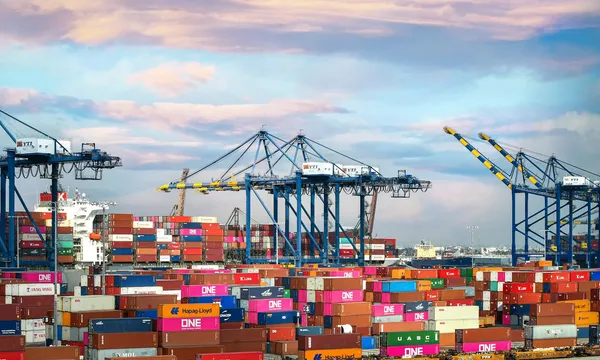
- Sea freight — 25–45+ days door to door depending on lane. LCL (less than container load) suits shipments from about 2 cbm; FCL (a full 20' or 40' container) is the cheapest per unit and reduces handling damage. Sea is the workhorse of import businesses.
- Rail — on the China–Europe corridor, roughly halfway between sea and air in both cost and time (~18–25 days).
Chargeable weight matters: air freight bills the greater of actual and volumetric weight, so bulky-light goods (pillows, plastic toys) often ship far better by sea.
Five beginner mistakes that cost real money
- Pricing off the unit cost alone — then discovering duty, freight and clearance ate the margin. Always build the landed-cost sheet first.
- Wrong or guessed HS code — leads to wrong duty rates, fines or seized goods. Confirm the code with your broker before ordering.
- Ignoring product compliance — goods that can't legally be sold (missing CE, FCC, labelling) are worthless inventory. Check requirements before production, not at customs.
- Booking freight late — capacity tightens and rates spike before Chinese New Year and in Q4 peak season. Book 2–4 weeks ahead of cargo-ready date.
- No insurance — marine cargo insurance typically costs a fraction of a percent of cargo value; a single damaged or lost shipment without it can erase a year's margin.