China remains the world's manufacturing heart, offering unmatched product range, competitive pricing and mature supply chains. But sourcing from China successfully requires understanding its landscape, customs and pitfalls. This comprehensive guide covers everything from finding the right factory to landing your goods.
Understand China's manufacturing geography
China's manufacturing is highly clustered by region and product type. Knowing where your product is made saves enormous time:
- Guangdong (Shenzhen, Dongguan, Guangzhou, Foshan) — electronics, hardware, furniture, lighting, toys.
- Zhejiang (Yiwu, Ningbo, Wenzhou) — small commodities, accessories, stationery; Yiwu is the world's largest small-goods wholesale market.
- Jiangsu — textiles, machinery, solar.
- Fujian — footwear, sportswear, stone.
- Shandong — machinery, food, tyres, agricultural products.
Sourcing within the right cluster gives you access to deep supply chains, component availability and competing suppliers.
Factory vs trading company
Both have their place. Factories offer the lowest prices and full customisation but require higher MOQs and may only make a narrow product range. Trading companies source from multiple factories, accept smaller and mixed orders, often communicate better in English, and can simplify managing several products — at a markup of typically 5–15%. For your first orders or for consolidating multiple products, a good trading company can be worth the premium. As volumes grow, going direct to the factory improves margins.
Negotiating MOQs, prices and terms
Initial quotes are starting points. MOQs are often negotiable, especially if you can commit to repeat orders or pay a slightly higher unit price for a smaller first run. When negotiating price, understand the cost breakdown (materials, labour, tooling, margin) so you push on the right levers. Be wary of pushing price too low — it usually comes back as quality cuts.
Clarify whether prices are EXW (ex-works, you handle everything from the factory door), FOB (free on board, supplier handles export to the port) or CIF (cost, insurance, freight to your port). FOB is the most common starting point for negotiations. Confirm what is and isn't included to compare quotes accurately.
Quality control is non-negotiable
Quality problems are the most common sourcing failure. Build QC into your process: approve a pre-production sample, conduct in-process inspection for large orders, and always perform a pre-shipment inspection (PSI) before paying the balance and releasing goods. Independent inspection companies will check a statistical sample against your specifications and an AQL (Acceptable Quality Limit) standard, typically for a few hundred dollars.
Document everything in writing — agreed specifications, tolerances, packaging requirements and acceptance criteria — and reference them in your purchase order. Verbal agreements and assumptions are where disputes begin.
Shipping, duties and landing your goods
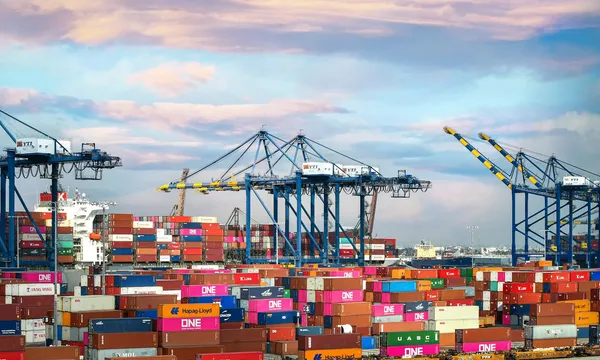
Factor the full landed cost into your pricing: product cost, shipping, insurance, import duties, customs clearance and local delivery. Engage a freight forwarder early — they handle the logistics and documentation. For small shipments, air freight or courier may be economical; for larger volumes, sea freight (LCL for partial container, FCL for full container) is far cheaper per unit.
Research your import duty rates and any required compliance (CE, FCC, safety standards) before ordering — non-compliant goods can be seized at customs. A licensed customs broker is invaluable for navigating this. Build 1–2 weeks of buffer into your timeline for inevitable delays.
Communication and culture: small things that matter
Most sourcing failures trace back to communication, not bad faith. A few habits dramatically improve outcomes:
- Write simply and specifically. Short sentences, numbered questions, no idioms. If you ask three questions in one paragraph, you'll often get an answer to one.
- Confirm everything in writing — after every call or WeChat conversation, send a written summary and ask for confirmation.
- Understand "yes". A supplier may say yes to preserve goodwill even when they mean "probably" or "we'll try". Probe with specifics: "What is the exact lead time for 5,000 units in March?"
- Respect the calendar. Factories effectively close for 2–4 weeks around Chinese New Year (January–February), and capacity tightens before it. Golden Week in early October adds another pause. Plan orders around these windows.
- Build the relationship. Suppliers give their best people, prices and production slots to buyers they trust and like. Politeness, patience and a face-to-face visit (or video call) go further than aggressive haggling.
Common pitfalls when sourcing from China
Experienced importers watch for a consistent set of traps:
- The bait-and-switch quote — an unrealistically low price that creeps up after you've invested time, or arrives as a lower-quality product. Compare quotes against the market median, not the minimum.
- The golden sample — a perfect sample followed by mass production that doesn't match. Mitigate with written specs and pre-shipment inspection against the approved sample.
- Quality fade — gradual cost-cutting over repeat orders (thinner material, cheaper components). Keep inspecting even long-standing suppliers, especially after a price renegotiation.
- The fake factory — a trading company presenting as a manufacturer. Not always a problem, but you should know what you're paying for; audit or video-walkthrough the actual production site.
- Subcontracting without consent — your order quietly produced by a different (cheaper) factory. Put a no-subcontracting clause in the contract and verify with in-process inspection for critical orders.
China plus one: diversifying your supply chain
Many buyers now pair China with a second sourcing country — the "China + 1" strategy — to hedge tariffs, geopolitical risk and single-point-of-failure exposure. Vietnam (electronics, furniture, footwear), India (textiles, leather, pharma), Turkey (apparel, machinery, EU proximity) and Mexico (nearshoring for North America) are the common complements.
China still wins on supply-chain depth: components, sub-assemblies, tooling and skilled trades concentrated in one ecosystem. The practical approach for most businesses is to keep complex, component-heavy products in China while moving simpler, labour-intensive or tariff-sensitive lines to a second country — and to qualify a backup supplier before you need one, not after.